10 Drone Etiquette at Tourist Attractions You Should Know

Labuan Bajo Productions Editorial Desk
November 19, 2026
12 min read

Capturing your travels from above with a drone offers a different perspective when visiting tourist destinations. You can take photos of landscapes, coastlines, small islands, and the atmosphere of your journey from angles that ordinary cameras cannot reach. However, flying a drone at tourist attractions is not just about getting great photos and videos. There are certain etiquette rules you need to follow to avoid disturbing other visitors, wildlife, and local communities.
So, what drone etiquette rules at tourist attractions should you understand before taking off? This article covers practical guidelines you can follow to ensure your aerial photography activities remain safe while respecting the destinations you visit.
Key Takeaways
- Before flying a drone at a tourist attraction, understand the destination’s regulations, permit requirements, flight zones, and permitted altitude and distance limits.
- Prioritise visitor safety by avoiding crowded areas, choosing safe take-off and landing spots, and paying attention to weather conditions.
- Respect local privacy and culture by avoiding recording private activities without permission or disrupting traditional ceremonies and sacred sites.
- Protect the environment by avoiding disturbances to wildlife, staying out of restricted zones, disposing of waste properly, and preserving natural habitats.
- If you want to capture your Labuan Bajo holiday without the hassle of operating a drone yourself, consider professional photo and video documentation services from Labuan Bajo Productions.
Drone Etiquette at Tourist Attractions
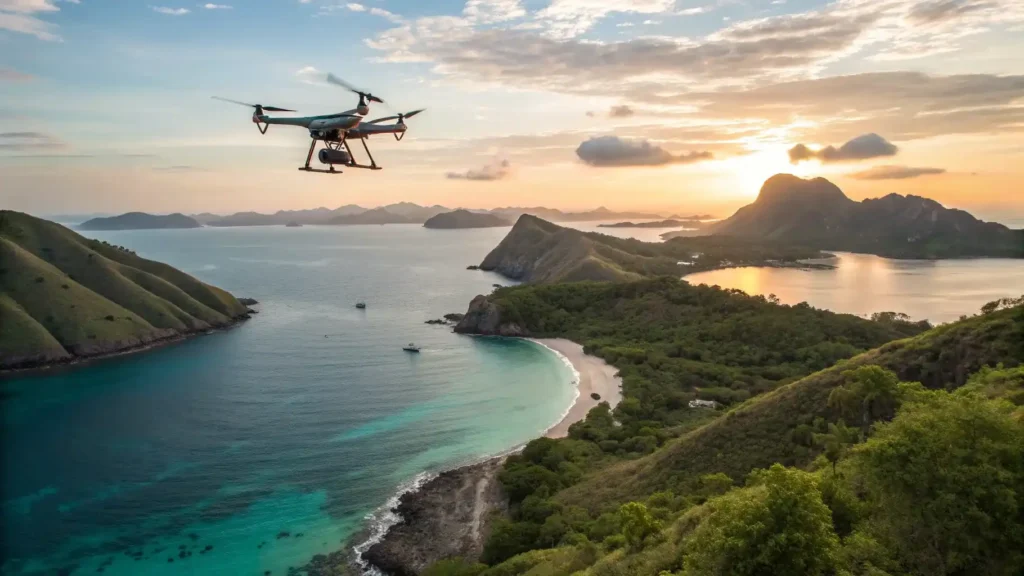
Every destination has its own characteristics and conditions. Flying a drone at the beach involves different considerations from operating one in mountainous areas, tourist villages, or national parks. To ensure your aerial photography does not interfere with other people’s travel experiences, here are ten etiquette rules you should keep in mind.
1. Check Drone Regulations Before Your Visit
Before bringing your drone to a tourist destination, make sure you understand the rules governing its use. Do not simply take off because the area looks open or spacious enough. Some destinations have specific regulations regarding drone permits, particularly in conservation areas, national parks, cultural heritage sites, and attractions managed by certain authorities.
To avoid violating any regulations, make the following preparations before your trip:
- Check destination regulations: Look for information on the official website or social media accounts of the attraction’s management.
- Contact the management team: Ask whether visitors are allowed to bring and operate drones at the destination.
- Prepare the necessary permits: Find out whether you need a flight permit, drone registration, or additional documentation.
- Check flight zones: Make sure the location you want to capture is not within a prohibited or restricted flight area.
- Understand operational restrictions: Pay attention to regulations concerning flight times, permitted areas, and the purpose of your flight.
If the available information is unclear, do not hesitate to contact the destination’s management directly. This helps you avoid permit-related issues while respecting the policies of the places you visit.
2. Avoid Flying Your Drone Over Crowds of Tourists
When visiting a popular destination, you may want to capture wide shots that show the entire atmosphere of the attraction. However, flying a drone directly over a crowd is not a wise choice. Drones can lose control due to signal interference, battery problems, strong winds, or other technical issues. If a drone falls into a crowded area, visitors below could get injured.
For this reason, avoid flying your drone in the following areas:
- Ticket queues and tourist attraction entrances.
- Gathering areas or attractions that are particularly crowded.
- Trekking trails filled with visitors.
- Children’s playgrounds and public facilities.
- Restaurants or dining areas with heavy visitor traffic.
If you want to capture the atmosphere of a destination, choose a quieter location and make sure your flight follows the applicable safety regulations. Remember, getting a great photo composition should never come at the expense of other people’s safety.
3. Respect the Privacy of Visitors and Local Communities
One aspect of drone use that is often overlooked is privacy. Drone cameras can record people from distances and angles they may not even be aware of. Even when a drone is being used to capture landscapes, it may unintentionally record private activities nearby. As a visitor, you need to pay attention to where your camera is pointing and what subjects appear in your footage. Here are some things you should avoid when using a drone for documentation:
- Pointing your camera at accommodation balconies, hotel rooms, or private residential areas without permission.
- Recording visitors’ faces up close without their consent.
- Capturing private activities involving local community members.
- Uploading footage that reveals someone’s private moments without considering their permission and the context.
If someone appears uncomfortable with the presence of your drone, respect their concerns. You can change your flight direction, choose another camera angle, or stop recording altogether. You should also review your footage before uploading it to social media. If it contains people or private activities that should not be made public, consider cropping or blurring those parts.
4. Do Not Disturb Wildlife with Drone Noise and Movement
Natural tourist destinations are often home to various types of wildlife, including birds, bats, mammals, and reptiles. These animals play an important role in the ecosystem and deserve protection. The sound of drone propellers and the movement of the device can make wildlife feel threatened, especially when the drone flies too close. Therefore, never use your drone to chase, follow, or approach wild animals just to capture close-up footage.
Pay attention to the following behaviours you should avoid:
- Flying your drone near bird nests or wildlife breeding areas.
- Following animals to get closer footage.
- Directing your drone towards places where animals rest.
- Using a drone to make animals move or fly just to capture a particular moment.
If you notice birds flying away, animals becoming restless, or wildlife changing its behaviour after your drone approaches, stop flying immediately and move away from the area. This is especially important when visiting national parks or conservation areas, where you must follow the specific regulations set by the management. Some locations even have stricter drone flight restrictions to protect wildlife and their natural habitats.
5. Respect Traditional Ceremonies and Sacred Sites
Not every tourist attraction is a public space where all activities are freely permitted. Some destinations are also closely connected to the cultural and spiritual lives of local communities. For example, when visiting traditional villages, temples, places of worship, or areas hosting religious ceremonies, you need to understand the restrictions surrounding photography and recording equipment.
Before flying your drone in these locations, keep the following points in mind:
- Ask permission from the site management or relevant authorities.
- Do not fly your drone over traditional ceremonies without approval.
- Avoid recording areas considered sacred or places where photography is prohibited.
- Stop flying if local community members or authorities express any concerns.
- Follow instructions regarding areas that visitors are allowed or prohibited from accessing.
Respecting local culture means understanding that not every moment should be turned into content. Some activities are better experienced and appreciated without recording them with a drone.
Read more: 6 Drone Spots in Labuan Bajo: Check Out the Best Recommendations Here!
6. Choose Safe Take-Off and Landing Areas
Responsible drone use also involves choosing the right location to start and finish your flight. Take-off and landing areas should not interfere with visitors’ activities or damage the surrounding environment.
Ideally, choose a location with the following characteristics:
- A relatively flat and stable surface.
- Away from areas where people are actively gathering or moving around.
- A safe distance from walking paths and children’s playgrounds.
- Not too close to cliffs or trees.
- Enough open space to operate and control your drone.
If you are at the beach, pay attention to the sand and wind, as both can affect your equipment. Meanwhile, when flying in hilly areas, make sure your landing spot is not too close to cliffs or trekking paths. You should also avoid using restaurant tables, tourist gathering areas, or public facilities as places to operate your drone. Once you have finished, pack away all your equipment so it does not inconvenience other visitors.
7. Pay Attention to Weather and Surrounding Environmental Conditions
Weather conditions are an important factor in drone flight safety. Strong winds, rain, fog, and sudden weather changes can affect your drone’s stability and your ability to control it. When visiting a tourist destination, do not force yourself to fly just because you want to capture footage at a particular time. Before taking off, carry out the following checks:
- Wind conditions: Make sure the wind speed is within your drone’s operating limits.
- Weather forecast: Avoid flying when it is raining or when thunderstorms are expected.
- Visibility: Make sure you can clearly see and monitor your drone’s position.
- Surrounding conditions: Look out for trees, cliffs, cables, and buildings that could obstruct your flight.
- Battery level: Make sure the battery has enough power to complete the flight and return to the landing point.
For example, when visiting a beach, strong winds can make your drone more difficult to control. The same applies when flying in hilly areas where wind direction can change. If the environmental conditions are not suitable, it is better to postpone your flight. Prioritising safety is far more important than getting one extra shot.
8. Do Not Use Your Drone to Access Restricted Areas
Some destinations have restricted areas to protect the environment, maintain security, or preserve people’s privacy. Having a drone does not give you greater access to these locations.
For example, avoid using your drone to capture footage of:
- Conservation zones where drone flights are prohibited.
- Security facilities and critical infrastructure.
- Private properties belonging to local residents or site management.
- Areas temporarily closed for conservation or safety reasons.
You should also never assume that an area visible from above is automatically open for aerial photography. Having permission to visit a destination does not necessarily mean you are authorised to operate a drone throughout the airspace above it. If the destination’s management has established flight boundaries, follow them. Do not attempt to fly your drone beyond restricted boundaries just to get a different camera angle.
9. Follow Safe Flight Altitude and Distance Limits
Operating a drone responsibly means understanding the applicable altitude and flight distance restrictions. Do not fly your device too high or too far just to capture a wider view. In Indonesia, the general regulation for drone operations in uncontrolled airspace sets a maximum altitude of 120 metres or 400 feet AGL (Above Ground Level). However, this does not mean that drones can be flown up to this height in every location. Controlled airspace, airport operating safety areas, and restricted areas have their own requirements.
In addition to altitude restrictions, make sure you follow these guidelines:
- Keep your drone within your direct line of sight (Visual Line of Sight or VLOS), as required by applicable regulations.
- Avoid flying too close to aircraft and helicopters.
- Do not operate your drone near airports or helipads without the required authorisation.
- Follow the altitude limits and flight zone restrictions established by the relevant authorities.
By following these requirements, you can monitor your drone’s movements and anticipate potential hazards throughout your flight.
10. Do Not Leave Litter or Cause Damage After Flying
Your responsibility as a drone user does not end once your device has landed. You also need to make sure your aerial photography activities do not leave behind waste or damage the destination’s environment. For example, do not dispose of damaged batteries, spare propellers, accessory packaging, or other equipment in tourist areas. These items can pollute the environment and pose a danger to wildlife.
Also, keep the following points in mind after using your drone:
- Take all your equipment and accessories with you.
- Do not leave damaged batteries or drone components behind.
- Avoid damaging vegetation when looking for a take-off location.
- Do not use coral reefs or natural habitats as places to put down your equipment.
- Check the surrounding area to make sure you have not left anything behind.
By adopting these simple habits, you can help maintain the cleanliness and natural beauty of the tourist destinations you visit.
Read more: Drone Regulations & Flight Permits in Labuan Bajo & Komodo National Park
Capture Your Labuan Bajo Holiday with Drone Services from Labuan Bajo Productions
Bringing a drone on holiday can be a great way to capture your journey from an aerial perspective. However, you also need to prepare your equipment, check flight regulations, secure permits when necessary, and operate your drone while paying attention to your surroundings. If you would rather focus on enjoying your trip without having to manage all these preparations, professional documentation services can be a practical alternative. Labuan Bajo Productions provides professional photo and video documentation services to capture different travel experiences, from sailing trips aboard traditional phinisi boats and visits to islands and beaches to snorkelling, trekking, and memorable moments with friends or family.
With the help of a professional documentation team, you can enjoy every activity more freely without constantly worrying about camera settings or operating a drone. So, if you are planning a sailing trip to Labuan Bajo and want to capture every moment without the hassle of bringing and operating your own drone, let Labuan Bajo Productions take care of your travel documentation. Contact our team to explore our Labuan Bajo trip documentation packages and find the option that best suits your holiday needs.